Tell me what kind of apartment you`re looking for, and I`ll quickly find offers that meet your expectations for free, as well as advise you on which one is best to choose.
Townhouse in the United Arab Emirates: how to choose a property
This guide is intended for Polish buyers and investors considering the purchase of a new home in the UAE for personal use, rental purposes, or as a second home. The information is general in nature and does not replace individual legal, tax, or investment advice.
Townhouse in the United Arab Emirates – who is it a good choice for?
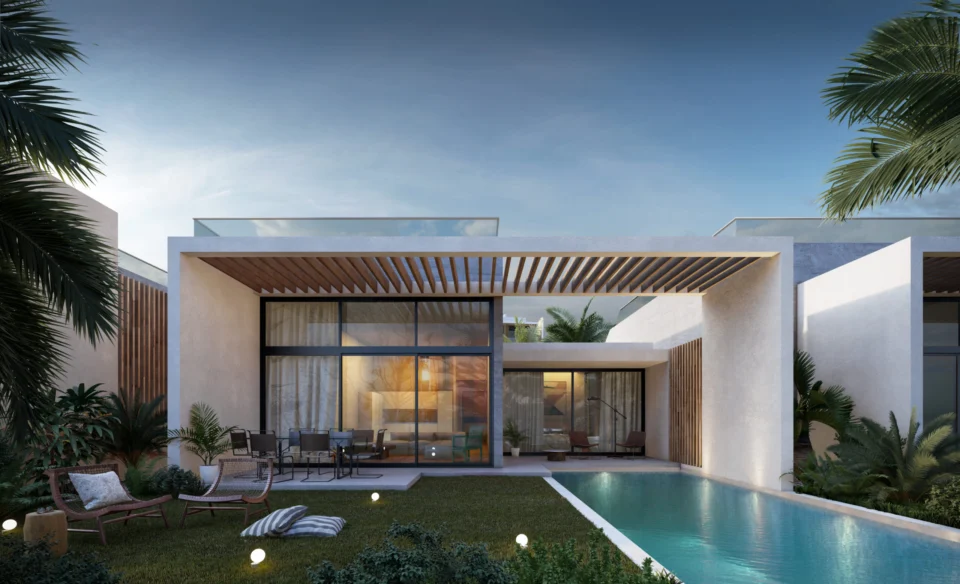
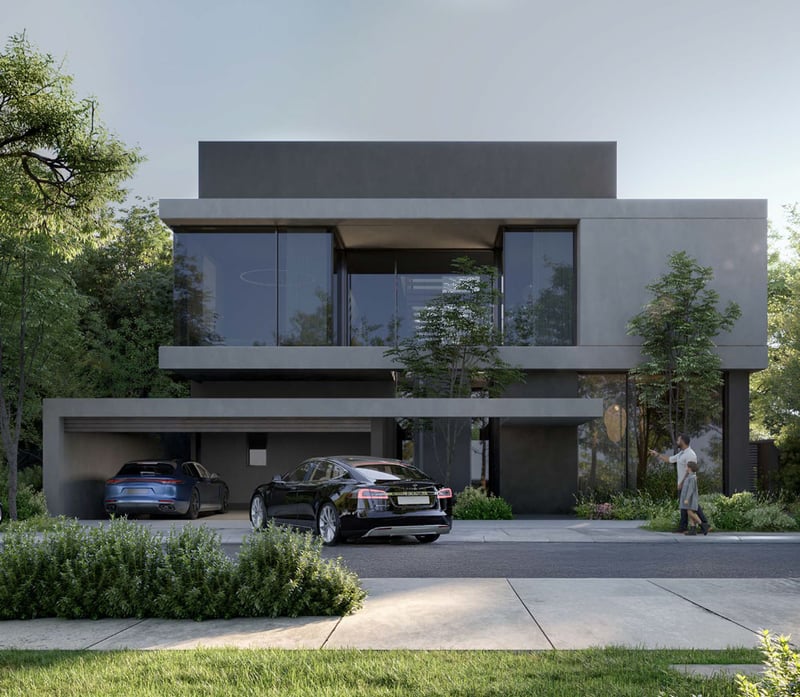
A townhouse in the United Arab Emirates is a home connected by a wall to a neighboring building, usually with its own entrance, terrace or garden, and parking spaces. It is an intermediate option between an apartment and a detached villa: it offers more privacy and space than an apartment, while usually requiring a smaller budget than a large villa.
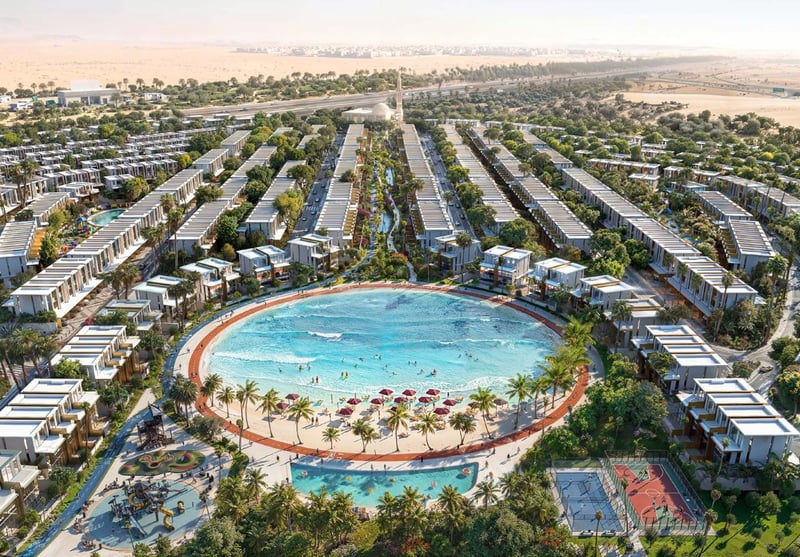
Townhouses in the UAE are often located in planned residential communities with swimming pools, green areas, playgrounds, security, and local service facilities. This solution is chosen by families who need several bedrooms and convenient access to schools, as well as by people planning to relocate or purchase a second home in a warmer climate.
For an investor, homes for sale in the UAE may be attractive as long-term rental properties, provided that the location matches actual tenant demand. An apartment may be easier to manage, while a detached villa offers greater independence but usually comes with a higher purchase price and maintenance costs.
It is worth remembering that real estate in the United Arab Emirates is not a uniform market. The project standard, ownership status, community fees, and rental rules depend on the emirate, the specific community, and the developer agreement.
Which emirate should you buy a townhouse in: Dubai, Abu Dhabi, Sharjah, or other regions?
There is no single emirate that is suitable for every buyer. A townhouse in Dubai may suit someone looking for a broad range of new developments and wanting to compare many communities. A townhouse in Abu Dhabi will more often be considered by buyers focused on family life, working in the capital, or a quieter daily pace.
A townhouse in Sharjah may appeal due to a different price level and proximity to Dubai, but before buying, it is necessary to carefully assess everyday logistics, commuting, and ownership status in the chosen location. Real estate in Ras Al Khaimah may suit people seeking a lifestyle closer to the coast and a smaller city, rather than an investor expecting the characteristics of the Dubai market. Fujairah and Al Ain are more specialized markets, so they require a particularly careful analysis of the purchase purpose.
Emirate or region
Most common purchase purpose
Supply characteristics
Buyer type
What to check
Dubai
rental, relocation, second home
wide range of new projects
investors, families, professionals
location, transport access, fees, and payment schedule
Abu Dhabi
personal use, relocation
residential communities and premium projects
families and people working in the capital
ownership rules, commuting, infrastructure
Sharjah
family home, alternative to Dubai
diverse supply in selected areas
buyers sensitive to budget and commuting
legal status of the project, traffic, regulations
Ras Al Khaimah
second home, lifestyle, selected investments
more selective market
buyers focused on leisure
tenant demand, management, and the project surroundings
Property ownership and the key legal issues for foreigners
Buying real estate in the UAE as a foreigner requires, above all, determining what right the buyer acquires in a specific project. UAE freehold generally means ownership rights to a property in a permitted area, which may be sold, inherited, and encumbered in accordance with local regulations. An alternative may be a long-term right of use, such as leasehold, meaning the use of a property for a period specified in the agreement.
Property ownership in Dubai and other emirates depends on local regulations and designated areas. You should not assume that the ownership form will be identical for every plot, community, or type of property. The status must be confirmed in the project documentation and with the relevant registration authority.
Before making a reservation, the buyer should receive and review the reservation terms, the property purchase agreement in the Emirates, the payment plan, cancellation rules, expected handover date of the home, and the amount of future community fees. For an off-plan project, it is also necessary to establish whether payments are made through an escrow account, if such a mechanism applies in the relevant jurisdiction.
Transaction registration, administrative fees, and procedures vary between emirates. An independent local lawyer should verify the legal title, sales documents, resale terms, and any restrictions concerning rentals and changes to the property.
How to choose a townhouse in the UAE: location, layout, community, and purchase purpose
It is worth starting the choice of a home with the purpose, rather than the visuals. Different criteria will be decisive for a family, different ones for an investor planning to rent out the property, and still others for someone buying a second home. A townhouse villa in the Emirates should meet everyday needs and fit a realistic plan for using the property.
The following checklist is helpful when comparing offers:
Location and commuting. Check travel time to work, schools, the airport, the beach, or key districts. New homes in Dubai located farther from the center may offer more space, but require acceptance of daily car travel.
Layout and usable area. The number of bedrooms does not tell the whole story. It is worth assessing the size of the living room, kitchen, workspace, children’s rooms, utility rooms, and the relationship between the interior and the garden.
Plot, privacy, and orientation. A corner unit, distance from neighbors, the view from the terrace, or location along an internal road may significantly affect comfort and the future appeal of the home.
Parking. Verify the number of allocated spaces, their practicality for larger vehicles, the availability of guest parking, and any restrictions imposed by the residential community. For a family with two cars, one space may be a practical problem, even if the home itself meets other expectations.
Community and maintenance costs. Ask about the standard of common areas, security, swimming pools, gyms, greenery, renovation rules, and rental regulations. Community maintenance fees should be analyzed as an ongoing part of the budget, not as a minor additional expense.
Investment purpose. When buying for rental, the profile of the potential tenant, access to services, and competing supply matter. For a planned resale, the recognition of the location, construction quality, and a realistic project completion schedule are important.
Projects such as Masaar or Tilal Binghatti Villas should be assessed based on current documentation, the exact location, the master plan, and the construction schedule. A rendering does not replace an analysis of the agreement, technical specifications, and payment terms.
How much does a townhouse cost in the UAE and what expenses should be included?
The price of a townhouse in the UAE is only the starting point for the budget. The final cost is affected by the emirate, stage of development, location within the community, size of the home and plot, finishing standard, and available amenities. Homes for sale in Dubai in early-stage projects may have a different payment schedule from completed properties.
Before signing the agreement, it is worth preparing a breakdown that includes:
the property price and settlement currency;
the installment plan, especially when buying from a developer;
registration and administrative fees;
commissions, if applicable to the transaction;
financing costs, if the purchase is financed with a loan;
legal costs and document translation costs;
annual community maintenance fees;
a budget for furnishing, relocation, or preparing the home for rental.
Investing in homes in the UAE also requires taking exchange-rate risk into account, especially when capital comes from euros or Polish złoty and payment is made in another currency. Tax conditions, property-related fees in the Emirates, and financing rules must be confirmed for the specific transaction before funds are paid.
What does the process of buying a townhouse from a developer or on the secondary market look like?
The process of buying property in the UAE is easier to manage when it follows an established sequence:
Determining the purpose and budget. The buyer determines whether rental, relocation, a second home, or capital diversification is the priority, and then sets a full budget including additional costs.
Choosing the emirate, location, and projects. It is worth comparing several offers using the same criteria: price, size, schedule, fees, and availability.
Document verification. It is necessary to check the ownership form, developer documents, draft agreement, payment plan, and handover and resale rules.
Reservation and agreement. Once the terms have been accepted, the reservation is made, the agreement is signed, and payments are made according to the agreed schedule.
Registration and handover. Once the transaction conditions have been met, registration takes place according to the procedure applicable in the emirate, and for a completed home, a technical inspection is also carried out.
Buying a home from a developer in Dubai or another emirate often involves staged payments and waiting for the development to be completed. The UAE secondary real estate market may offer a faster opportunity to move in or begin renting out the property, but it requires equally careful checks of the documents, the condition of the home, and existing obligations.
A real estate advisor in Dubai can help compare projects, organize communication with the developer, and coordinate subsequent steps. However, they do not replace an independent lawyer or tax advisor.
When is it worth consulting an advisor about choosing a townhouse in the UAE?
A consultation is particularly useful when buying remotely, comparing Dubai with Abu Dhabi or Sharjah, choosing between a completed home and an off-plan project, and planning a rental. It is also worth using one when the buyer wants to understand the total costs, ownership rules, or the possible connection between the purchase and a residency procedure.
MAG World Properties helps match the emirate, location, and property type to the client’s objective. The agency focuses on the primary market and supports project analysis from verified developers, process coordination, and contact with local specialists. Investor services are paid for by developers, so the client does not pay an agency commission.
Before the conversation, it is worth preparing an approximate budget, planned purchase date, property purpose, preferred location, and information on whether the purchase is to be completed remotely.
Frequently asked questions
Can a foreigner buy a townhouse in the United Arab Emirates?
Yes, a foreigner can buy a townhouse in designated areas and under the rules applicable in the relevant emirate. Before purchasing, it is necessary to confirm the ownership form of the specific project and conduct an independent verification of the documents.
Is it better to buy a townhouse in Dubai or Abu Dhabi?
It depends on the purpose of the purchase. Dubai offers a wide choice of new projects, while Abu Dhabi may be better suited to people focused on family life or work in the capital. Location, budget, and the intended use of the home are key.
What fees does a townhouse owner in the UAE pay?
The owner usually bears the costs of community maintenance, utilities, insurance, and possible rental management. When buying, registration, administrative, legal, and financing costs must also be taken into account, if applicable.
Can buying property in the UAE support obtaining residency?
Yes, in certain cases, a property may provide grounds for applying for residency, but it does not guarantee that residency will be granted. As of 27 August 2026, the conditions must be confirmed each time with the Federal Authority for Identity, Citizenship, Customs and Port Security and the relevant emirate authorities.Official information on UAE residence visas
The safest decision when choosing a townhouse in the UAE is based on three elements: a clearly defined purchase purpose, a full budget including ownership costs, and verified documentation for the specific project. Only after comparing the location, ownership rules, home layout, parking, community fees, and payment schedule can you assess whether a particular property truly fits your plan.
Thank you for trusting MAG World Properties. Our expert will contact you to discuss your purchase goals, budget, and preferred destination — and suggest the next step.