




Why Buying Property in Spain Is Worth Considering
Buying property in Spain can combine three objectives: a second home, relocation, and property investment with the option of generating rental income. However, it is not automatically the right decision for everyone — its suitability depends on the location, budget, intended use of the property, taxes, and ongoing costs.
This guide is intended for Polish buyers and investors considering Spain’s primary property market. We explain why buying property in Spain may be worth considering, as well as what should be verified before committing funds. The following 10 benefits should be treated as criteria for an individual assessment rather than as a promise of returns.
Legal and procedural information verified as of August 2026. This material is for informational purposes only and does not constitute individual legal, tax, or investment advice
10 Key Benefits of Buying Property in Spain
The main advantages of buying property in Spain come from the combination of lifestyle, access to a variety of regional markets, and the possibility of using the property both personally and for rental purposes. However, these benefits should always be assessed in relation to a specific property rather than the country alone.
- A longer period of the year in which you can use your house or apartment.
- Well-developed infrastructure in many coastal destinations and cities.
- The possibility of combining personal stays with rental.
- A choice between tourist, urban, and island markets.
- A range of new developments with different standards.
- A purchase process accessible to foreign buyers, subject to appropriate legal verification.
- Income potential in locations with genuine demand.
- Convenient air connections with the rest of Europe.
- Diversification of assets outside Poland.
- Access to local legal and operational support.
1. Climate and the Possibility of Using the Property for More of the Year
In many regions of Spain, the climate makes it possible to use an apartment beyond the short summer holiday season. This can be particularly relevant for remote workers, families planning winter stays, and owners who want the flexibility to combine personal use with rental.
However, conditions vary between coastal areas, major cities, and islands. Before buying, it is worth considering not only average weather conditions but also the property’s orientation, heating and air conditioning, and whether the development remains fully operational outside the high season.
2. Lifestyle, Infrastructure, and Access to Services
Beaches, gastronomy, and leisure are part of the everyday experience, but shops, healthcare, schools, transport, and year-round access to services are equally important for property owners. The right neighbourhood should reflect how the property will actually be used.
When viewing a property, it is worth walking the route from the development to the nearest shop, public transport stop, beach, and town or city centre. A property located far from essential services may be less convenient for the owner and more difficult to rent outside the peak season.
3. The Possibility of Combining Personal Use With Rental
An apartment can be used by the owner during selected periods and rented out at other times. However, this model requires a booking calendar, efficient management, and realistic assumptions about occupancy.
Short-term rentals are subject to regional and local regulations, which may require registration or a tourist licence. Before purchasing, it is important to confirm whether the specific building, municipality, and owners’ association permit the intended rental model.
4. Diverse Markets for Different Goals
Spain is not a single, uniform property market. Someone looking for a second home by the sea will have different requirements from an investor interested in year-round rental or a family preparing for relocation.
Holiday destinations may be better suited to lifestyle use and seasonal demand. Urban markets may be more relevant for buyers focused on services, employment, and year-round living. Island markets have their own characteristics in terms of accessibility, supply, and property management.
5. A Wide Choice of New Developments and Finishing Standards
The primary market offers modern layouts, common areas, parking spaces, swimming pools, and solutions designed to support energy efficiency. For buyers, predictability of the final standard is also important, provided the specifications are clearly defined in the contract.
However, a project should not be assessed solely on the basis of visualisations. When buying from a developer in Spain, it is important to verify the documentation, payment schedule, finishing specifications, handover conditions, and payment protection mechanisms in accordance with the applicable regulations.
6. A Relatively Transparent Purchase Process for Foreign Buyers
Foreign buyers can purchase property in Spain, although the transaction requires appropriate documentation and legal verification. One of the basic requirements is the NIE — Número de Identidad de Extranjero, the foreigner identification number used for administrative and tax purposes.
The buyer should work with an independent lawyer who can verify the legal title, encumbrances, contractual terms, and payment arrangements. A real estate agent can coordinate the process and property selection but does not replace independent legal due diligence.
7. Rental Income Potential in Sought-After Locations
A property’s income potential depends primarily on its micro-location, standard, legal eligibility for rental, seasonality, and actual demand. The purchase price alone does not determine future performance.
Calculations should include management, cleaning, utilities, community fees, insurance, taxes, and periods without bookings. Rental income projections are best prepared using conservative, base-case, and favourable scenarios rather than being treated as guaranteed results.
8. Accessibility From Poland and Other European Countries
Proximity to an airport and convenient flight connections matter both to the owner and potential tenants. A second home that can be reached without a complicated journey is easier to use regularly.
It is worth checking the transfer time from the airport, the availability of flights outside the high season, and transportation costs. For holiday properties, these factors can sometimes have a greater impact on attractiveness than the distance to the beach itself.
9. The Opportunity to Diversify Assets
Overseas property can form part of an asset diversification strategy, spreading wealth across different asset classes and markets. This does not eliminate risk — factors such as resale liquidity, price fluctuations, regulatory changes, and ongoing maintenance costs still need to be considered.
For buyers from Poland, currency risk is also relevant, as the purchase price and ongoing financial obligations are generally denominated in euros. The purchase should fit within the buyer’s broader portfolio and intended holding period rather than being based on short-term expectations.
10. Professional Support During the Purchase and After Handover
Buying property abroad requires the coordination of multiple stages: property selection, communication with the developer, documentation, payments, handover, and arrangements for the property after purchase. Professional support can be particularly valuable when the buyer is not permanently based in Spain.
MAG World Properties works with primary-market projects and states in its documentation that it selects developers with at least five years of experience and verifies project documentation. The agency’s services are paid for by developers, so the investor does not pay an agency commission.
The scope of payment protection and project documentation should always be confirmed individually for the selected development.
Which Region of Spain Matches Your Purchase Goals?
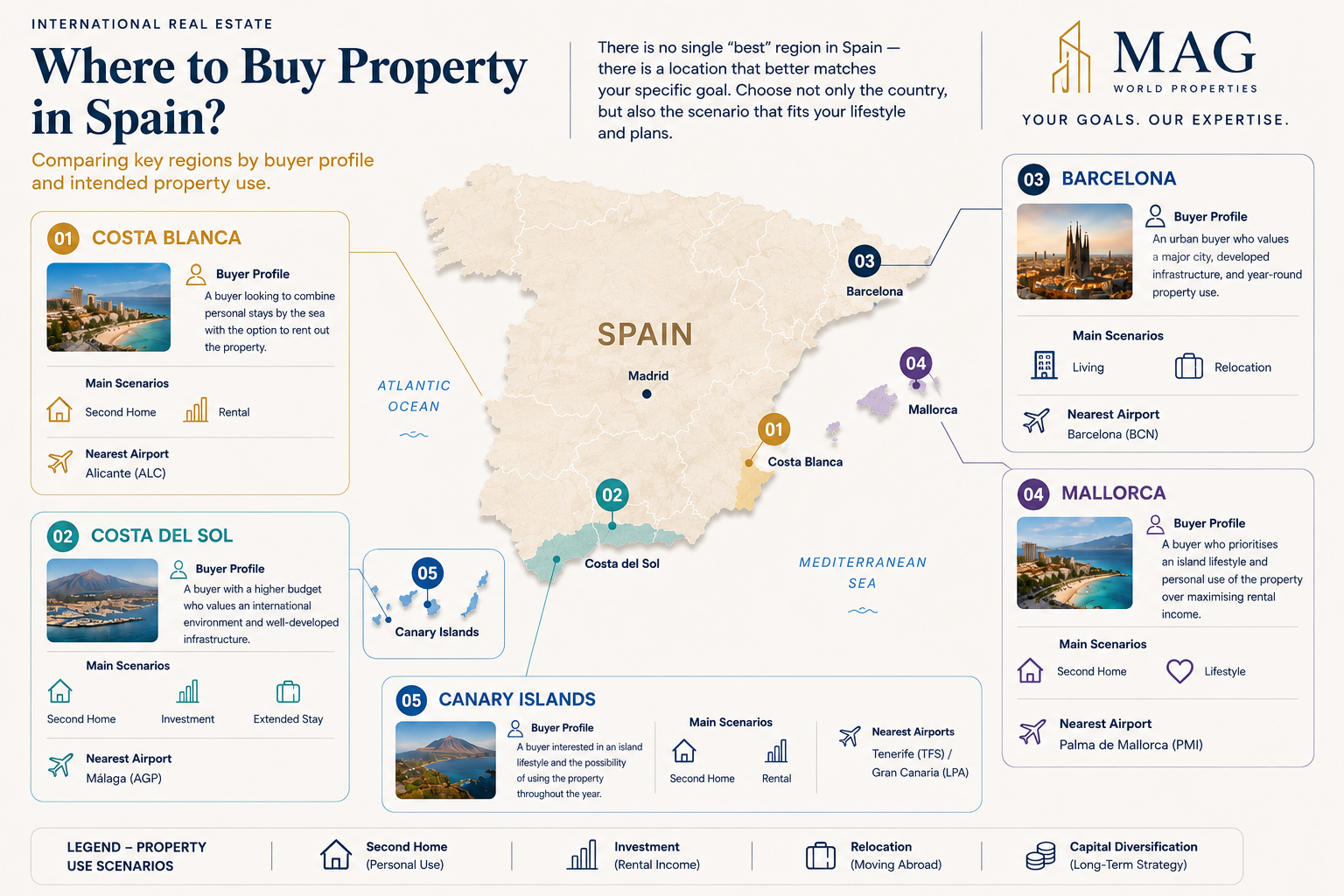
The best locations for buying property in Spain are not the same for everyone. When choosing a region, it is important to consider your budget, intended use of the property, length of the season, access to services and airports, as well as local rental regulations.
Costa Blanca: Alicante and Torrevieja for a Second Home and Holiday Rentals
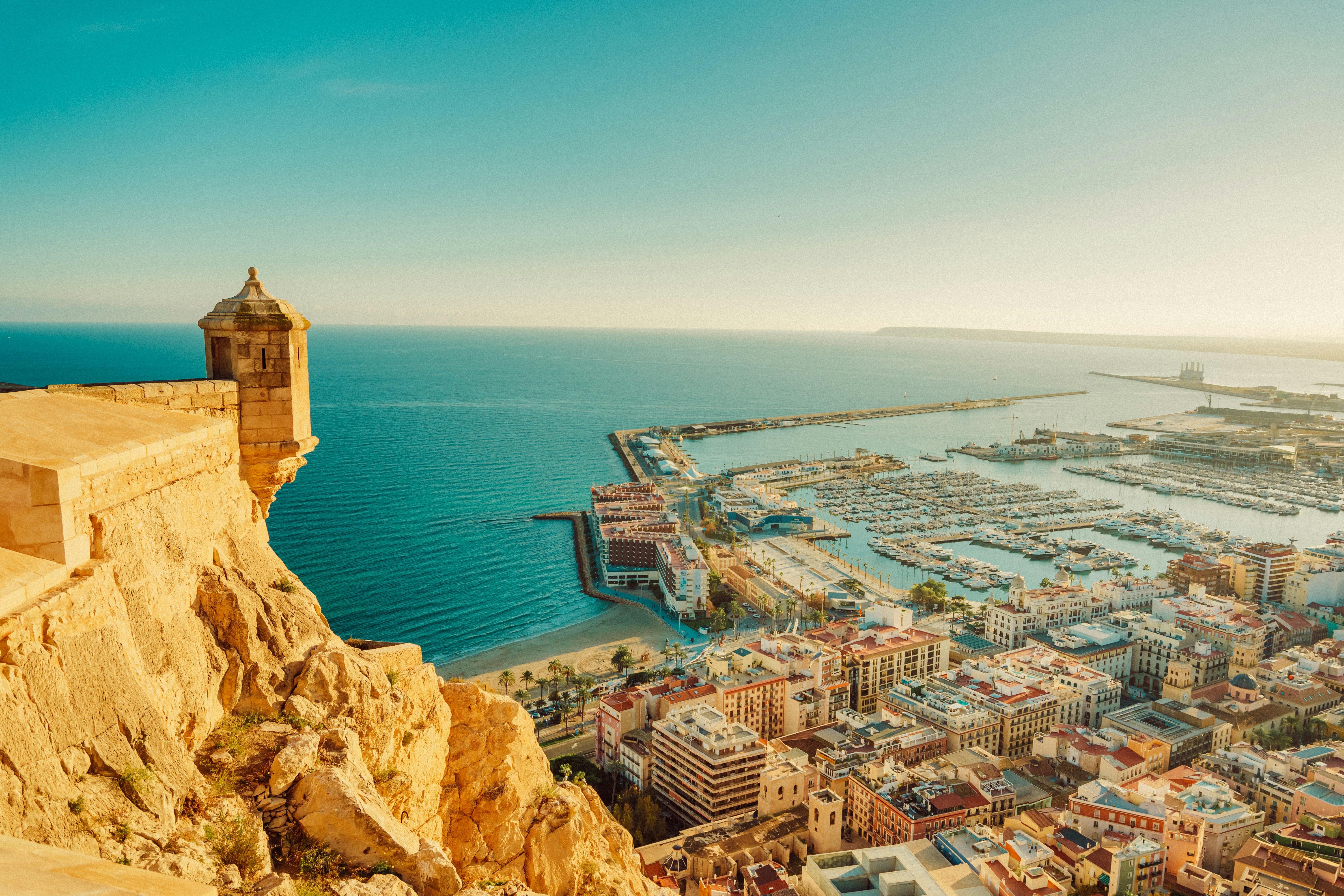
Properties on the Costa Blanca, including the areas around Alicante and Torrevieja, are often considered by buyers looking for a second home with access to an airport, beaches, and everyday amenities. This region is worth considering for those who want to combine personal use with holiday rentals.
However, comparing specific neighbourhoods remains essential. Alicante may be better suited to buyers who value an urban environment, while Torrevieja is often considered by those focused on holiday stays. Before making a decision, it is important to verify local rental regulations and the year-round availability of services.
Costa del Sol, Barcelona, Mallorca, and the Canary Islands: When to Consider Other Destinations
Costa del Sol properties may appeal to buyers looking for well-developed leisure infrastructure and an international market environment. Barcelona offers a different proposition — a more urban setting, with demand linked to employment and services, but also subject to local regulatory restrictions.
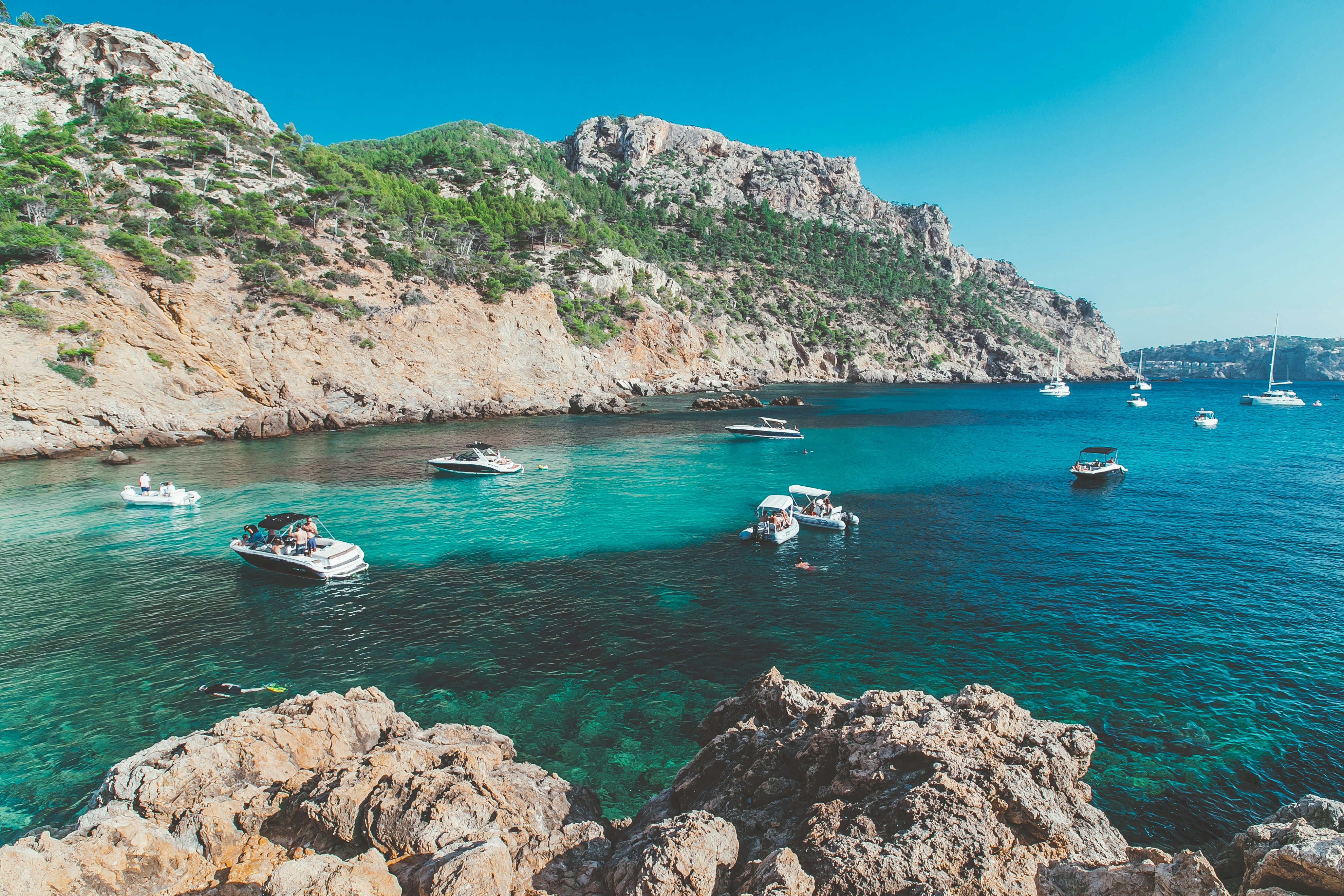
Mallorca may suit buyers who value an island lifestyle, while the Canary Islands may be of interest to those planning more frequent stays outside the summer season. Entry prices, property availability, and rental conditions should be assessed separately for each island, city, and individual development.
How to Buy Property in Spain Safely: A Step-by-Step Guide
A safe step-by-step process for buying property in Spain starts with defining your goal and full budget and ends with registering ownership and preparing the property for use. The most important rule is not to transfer any funds before the documents have been independently verified.
- Define your purchase goal: personal use, relocation, rental, or a combination of these purposes.
- Set your budget, including the property price, purchase costs, and a reserve for ongoing expenses.
- Choose the region and properties that match your requirements.
- Engage an independent lawyer before signing any documents.
- Apply for an NIE number and arrange your financing.
- Verify the contract, legal status, and payment terms.
- Sign the notarial deed and ensure that ownership is subsequently registered.
Property Selection, Reservation, and Document Verification
Before paying a reservation fee, it is important to verify who owns the property or land, whether there are any encumbrances, what the refund conditions are, and how the payment schedule is structured. For a new development, the permits, property specifications, and handover date should also be reviewed.
The buyer should receive the agreement in a clear and understandable form and understand the consequences of each payment. The lawyer verifies, among other things, information available in the Spanish Property Registry (Registro de la Propiedad).
NIE Number, Notarial Deed, and Property Registration
Foreign buyers need an NIE number to complete many procedures related to purchasing property and handling financial and tax matters in Spain. The application is submitted in accordance with the procedures of the relevant administrative authorities or through a Spanish consulate.
The transaction is finalised before a notary through a deed transferring ownership. The notary performs specific formal procedures, but the buyer should still have their own independent lawyer. After signing the deed, the relevant tax filings should be completed and the ownership registered in the Property Registry, which strengthens the protection of the buyer’s rights.
Costs, Taxes, and Financing: What to Consider Before Making a Decision
The cost of buying property in Spain goes beyond the asking price. Property purchase taxes in Spain depend on whether you are buying on the primary or secondary market, as well as on the autonomous community in which the property is located.
|
Cost Type |
What It Includes |
When to Confirm |
|
Purchase Price |
Price of the property and any additional features |
Before reservation |
|
Transaction Taxes |
Depend on the market and region |
Before signing the agreement |
|
Notary and Registration |
Notarial deed and registration in the Property Registry |
Before completion |
|
Legal Services |
Independent review of documents and agreements |
Before reservation |
|
Financing |
Loan costs, if applicable |
Before applying |
|
Ownership Costs |
Community fees, utilities, insurance, and ongoing taxes |
Before purchase |
You should not assume a single universal rate for additional costs. Tax obligations and fees should be confirmed with a lawyer and checked against up-to-date regional sources and the Spanish Tax Agency (Agencia Tributaria).
How to Assess an Investment and Reduce Risk
A well-considered property investment in Spain should be based on documentation, actual demand, and a clear plan rather than simply on promises of high rental income. Before purchasing, it is worth going through a short checklist:
- Is the micro-location attractive to the intended tenant profile?
- Is rental legally permitted, and under what conditions?
- What are the operating costs and potential vacancy periods?
- Does the developer have a documented track record and complete project documentation?
- What is the exit strategy if the property needs to be sold?
- Does the budget account for construction delays, euro exchange-rate fluctuations, and a financial reserve?
When buying from a developer in Spain, particular attention should be paid to payment terms, the completion date, property specifications, and handover conditions. Any rental income forecast should be treated as a market-dependent scenario rather than a guarantee.
When to Arrange a Consultation Before Buying
A property purchase consultation can be particularly useful when choosing between regions, considering a property for rental purposes, or comparing several new developments. It can also be valuable when your budget is already defined but you are not yet sure which location and property type best match your goal.
MAG World Properties starts by discussing how you intend to use the property, your budget, and the level of risk you are prepared to accept. A real estate agent in Spain can then assist with project selection, document coordination, and communication with a local lawyer. The final purchase decision always remains with the client.
Frequently Asked Questions
Can a Foreigner Buy Property in Spain?
Yes, foreigners can buy property in Spain. In practice, buyers need an NIE number, the appropriate documentation, and independent legal verification before signing the agreement and notarial deed.
How Much Are the Additional Costs of Buying Property in Spain?
There is no single universal amount for additional purchase costs, as they depend on the region, property price, and whether the property is purchased on the primary or secondary market. The budget should account for taxes, notary and registration fees, legal services, potential financing costs, and expenses related to preparing the property for use.
Is Buying an Apartment in Spain for Rental Purposes Profitable?
It can be profitable if actual demand, the legal possibility of renting the property, and the full operating costs are properly verified. The outcome depends on location, seasonality, property standard, occupancy, and the management model, so rental income should never be treated as guaranteed.
What Should You Check Before Buying Property From a Developer in Spain?
Before purchasing, you should verify the developer, project documentation, permits, contract, payment schedule, and finishing specifications. An independent lawyer should also assess the payment protection mechanisms, handover conditions, and terms for transferring ownership. Book a consultation about buying property in Spain. Exact prices, availability, taxes, and transaction terms are confirmed individually for each selected region and project.